
 Loading...
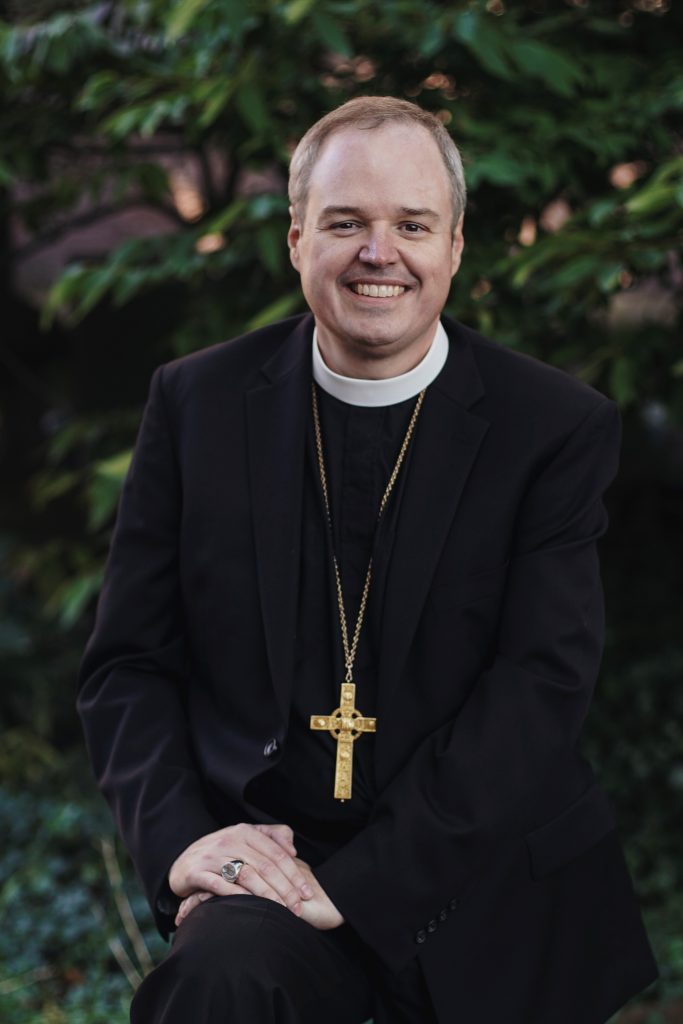
With a little less than a week before the General Convention of the Episcopal Church in Indianapolis, Indiana, the bishop and deputies are preparing their packing lists, but preparations have actually been underway for quite some time. The “Blue Book,” a 759 page book of reports and resolutions was published in April. Deputies and Bishop Young attended the Province IV Synod in the first week of June with House of Deputies President Bonnie Anderson and Presiding Bishop Katharine Jefferts Schori, where they learned and talked about legislation and networked with other deputations. The bishop and deputies also held mid-June Pre-General Convention open meetings in each region of the diocese.
Called the “Family reunion of the Episcopal Church,” the General Convention will meet from July 5 to July 12. This will be the 77th time the Church has assembled, guided by the Holy Spirit, to set the direction of the church’s mission and ministry.
More than 1,000 bishops, deputies, friends and visitors from all over the world will come together in the prayer, sharing and legislation that are all part of the gathering that is one of the largest legislatures in the world.
A wide-range of issues is considered at each triennial gathering. The issues, in the form of resolutions, originate with bishops, deputies, diocesan conventions, provincial synods, and the committees, commissions and boards that help to carry out the work of the Church between meetings of General Convention
281 resolutions are currently listed for consideration at General Convention. Each resolution is assigned to one of several joint committees of the House of Bishops and the House of Deputies. The committees consider each resolution, hear testimony on the subject matter, revise the language, combine similar resolutions from different sources, and finally decide which resolutions will be sent to the full Houses for a vote in each. A resolution fails if it is not passed by both Houses.
While the convention may seem removed from the life of a parish in the diocese, there are issues that come before convention that will have an impact on the life and work of the local church. For example, there are resolutions calling for study and recommendations about the structure of the Episcopal Church, and the Church budget will affect us all in one way or another – such as increases or decreases in program funding or Church staff, as will resolutions about liturgy and public policy statements.
East Tennessee Episcopal Church Women will be attending the ECW Triennial, a once-every-three years meeting of the ECW that also gathers at the General Convention.
About the General Convention
The General Convention is the governing body of the Episcopal Church (TEC) that meets every three years. The Convention is a bicameral legislature that includes the House of Deputies and the House of Bishops. The work at Convention is carried out by deputies and bishops representing each diocese.
During its triennial meeting deputies and bishops consider a wide range of important matters facing the Church. Legislation considered at General Convention must pass with exactly the same wording in both Houses to be official policy of The Episcopal Church.
All bishops of the Episcopal Church, active and retired, are entitled to seat, voice and vote in the House of Bishops. The House of Bishops is chaired by the Primate of the Episcopal Church, Presiding Bishop Katharine Jefferts Schori. There are currently around 300 bishops in the Episcopal Church.
Each of the 110 dioceses of the Episcopal Church may elect up to four clergy and four laity, plus up to four alternates, to serve as deputies in the House of Deputies. There are more than 800 members in the House of Deputies
Elected deputies vote their conscience for the good of the church, so they are not representatives and cannot be instructed to vote one way or another. However, members of the church may share their thoughts on the business to come before General Convention. Regional pre-convention meetings, completed in June, provided opportunities for face-to-face conversation with deputies.
Follow all things General Convention at the Diocese of East Tennessee General Convention Hub Page: //dioet.org/digital_faith/gc
Go directly to the Episcopal Church General Convention page: //generalconvention.org
Our Deputies who will be attending General Convention and the Committees on which they serve. Note that first-time deputies are generally not assigned a committee.
Lay
Ms. Lynn Schmissrauter, Deputation Chair, Bishop Election Consents Committee
Mr. Henry Lodge, Christ Church, South Pittsburg
Mr. Mike Keene, Resurrection, Loudon
Ms. Jennifer Dunn, Good Samaritan, Knoxville
Mr. Erik Broeren, Grace Church, Chattanooga, lay alternate
Clergy
The Rev. Hendree Harrison, St. Paul, Athens
The Rev. Cal Calhoun, Good Samaritan, Knoxville, World Mission Committee
The Rev. Maggie Zeller, St. Christopher, Kingsport, Liaison to Music, Prayer Book & Liturgy for Dispatch of Business Committee
The Rev. Suzanne Smitherman, St. Paul, Chattanooga, Committee for Music, Prayer Book and Liturgy
The Rev. Leyla King, Thankful Memorial, Chattanooga, clergy alternate
The Rev. Chris Harpster, St. Paul, Kingsport, clergy alternate
To Watch
There are a number of issues that are receiving much attention for this General Convention. Here are some of the issues to watch:
Church Structure Vigorous discussions have been held by leadership at every level of the Church about changes to the Church structure – from the administrative offices of the Church to the timing, length and scope of General Conventions. This was one of the top issues discussed at the Province IV Synod and it is expected to generate considerable discussion at the convention. Many dioceses, including the Diocese of East Tennessee, have submitted resolutions calling for a special commission to present a plan to the 2015 General Convention for structural reform “to facilitate this Church’s faithful engagement in Christ’s mission…” (See the East Tennessee resolution here.
Church Budget Another issue that will generate much discussion is the Episcopal Church budget. Declining revenue is expected from both investments and from dioceses in the Church during the next triennium. The budget always carries energy at the convention, and, at this convention, there is controversy over proposed significant cuts and reductions. A budget has been put forward for a more mission-focused church, and the presiding bishop recently published a proposed budget. Follow the budget conversation here.
Health and Pension Benefits Resolutions were passed at General Convention 2009 planned for implementation in 2013, requiring the Episcopal Church to offer health and pension benefits with parity for clergy and laity, giving lay employees access to the same benefits as clergy. The issue was one of fairness, however other issues have arisen around the implementation of the plan. One cause of concern is potential financial hardship for some parishes. There are resolutions at the 2012 General Convention asking for revisions to the plan passed in 2009.
Trial Use of Liturgies for Same Gender Blessings At the 2009 General Convention, bishops and deputies passed a resolution (2009-C056) asking for development of liturgical resources for same-gender blessings. The Standing Commission on Liturgy and Music has solicited feedback and input from across the Church and used a theology of blessing to develop “Liturgical Resources I: I Will Bless You and You Will Be a Blessing.” A 2012 resolution calls for congregations and dioceses to study and use the resources and for authorization of trial-use of "The Witnessing and Blessing of a Lifelong Covenant." The resolution also asks for the continuation of the “generous pastoral response to meet the needs of members of this church,” called for in 2009-C056, including allowing for adaptation of the rite for local use.
If the resolution passes, Bishop Young said that congregations and clergy will have the option of whether or not to conduct same-gender blessings. He has also noted that some may think that if this trial blessing is authorized, then couples will be married using the liturgy - but this liturgy is not for marriage – however, it is about relationship. Same-gender marriages are currently allowed in six states (Massachusetts, Connecticut, Iowa, Vermont, New Hampshire, New York) and the District of Colombia. Washington and Maryland have passed legislation, but those laws have not yet taken effect.
If a related resolution proposed by the SCLM passes, the Church also would reflect on its understanding of marriage in light of changes in both societal norms and civil law during the next triennial.
Response to the Anglican Covenant In 2009, the Archbishop of Canterbury commended a covenant to the 38 provinces of the Anglican Communion which would define what holds the provinces together and provide a process for dealing with conflict between Anglican provinces. The idea for a covenant to deal with strained relationships in the Communion was suggested in the 2004 Windsor Report following the ordination of an openly gay bishop in an American diocese and adoption of blessings for same-gender unions in a Canadian diocese. Many of the provinces have already considered the Anglican Covenant, some accepting it and some rejecting it. Several resolutions have been submitted to the Episcopal Church General Convention with a range of proposed responses – outright rejection or acceptance and positions in between, such as refusing the covenant but wishing to remain in conversation and communion.
Communication and Information Technology Several resolutions are proposed on how best to use technology to meet our mission goals, including recognizing communications as ministry, challenging congregations to develop web sites, and developing a strategic plan for Information Technology.
Consent to the Election of Eight Bishops In order for a bishop-elect to become a bishop, a majority of bishops with jurisdiction and the majority of diocesan standing committees must consent to the bishop-elect’s ordination as bishop within 120 days of receiving notice of the election. In a General Convention year, if an election of a bishop takes place within 120 days before the meeting of the General Convention, the consent process will take place at the convention per the constitution and canons of the Episcopal Church. There are eight bishops whose elections fall within this timeframe, and whose consent will be considered at the convention.
Christian Responsibility for Those in Prison The 2012 Diocesan Convention passed a resolution urging the support of the United States Senators and the United States Representatives from the State of Tennessee for a United States Commission on Criminal Justice. The commission would examine whether the American prison system comports with Christian principles of responsibility for those in prison and to determine whether there are financially prudent alternatives which would limit the costs of incarceration and supervision while helping those convicted of crimes to return to productive lives as citizens. The resolution also asked that our deputies seek a similar resolution from the General Convention. Read the East Tennessee Resolution here. The General Convention resolution is D026.
After General Convention
Once General Convention is over, we’ll begin looking at what it means for us in East Tennessee. Look for a letter from the bishop just following the convention and plan to attend a post-General Convention regional meeting in mid-August. The meetings are scheduled August 13 at St. Paul, Chattanooga, August 14 at Good Samaritan, Knoxville and August 15 at St. Christopher, Kingsport. Those attending the meetings will have the opportunity to hear from the bishop and deputies and to ask questions and discuss our life together in the diocese.
The deputies and bishop ask that you keep them and the entire church in your prayers.