
 Loading...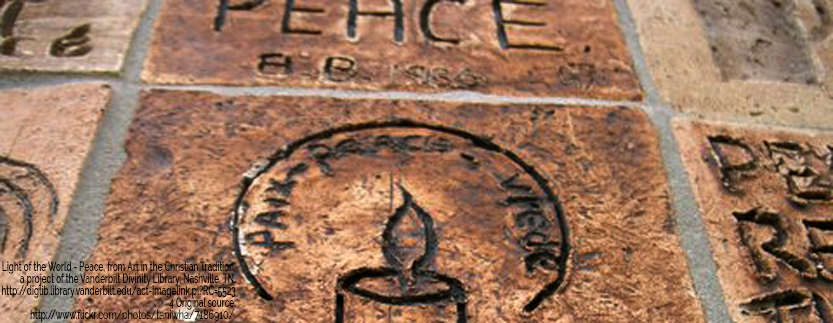
St. Luke, Cleveland, Tenn., Second Sunday of Easter 2018 – John 20:19-31
The room is locked.
It is sealed shut with chairs under doorknobs or a chest of drawers in front of the door or whatever the New Testament equivalent is for doing everything you can to keep the “out there” from coming into the “in here.” Though the disciples fear for their life, they are already sealed inside a kind of tomb.
Their actions are enough to remind you of Jesus’ saying about those who would save their life end up losing it. Jesus had promised abundant life. Now, eleven people are settling for all the life you can have if you stay inside behind a locked door.
Despite Mary Magdalene’s witness to seeing the Risen Jesus, her words are not enough to overcome the disciples’ fear. The One they believed dead, after being abandoned by them and crucified by an Empire, is alive, says Magdalene. The disciples, supposedly alive, instead choose to enter into a grave of their own making and act as dead men.
Jesus enters this room. It is the Jesus who has died, who was placed in a tomb of his own. Actually, the tomb was borrowed, a grave loaned to him by a follower from a distance.
So, after leaving a tomb that could not hold the Resurrected Life in him, Jesus performs a different kind o f miracle when he chooses to enter a locked room. Where better to continue the announcement of Resurrection but in a room filled with the walking dead?
In New Testament scholarship, this story is considered a post-Resurrection narrative. I would suggest we also have before us a healing story.
Before Jesus enters the room, the disciples can already see, are able to walk, as far as we know, they are not in need of the Jesus who healed blindness and lameness and raised the dead.
But their hearts are heavy and their souls are wounded and plans for anything beyond that room are in disarray. The Resurrected Jesus who enters that locked room finds an ER of the spirit and the soul. And each case is urgent, critical. Is there a doctor in the house?
Who is this One who has entered the locked room? Who is the Jesus we follow and proclaim to others? Who is our help in trouble and the source of our hope? He is the One who begins this healing story by addressing a group of friends who had abandoned him in the deepest and darkest and deadest place He had ever known by saying one word.
He had every right for the word to be “Shame” or “Hurt” or “Hate” or “Pain” or “Why.” But those are not the words that Jesus took with him into that room, that cell of fear.
Jesus addresses his friends by saying, “Peace.” “Peace be with you.”
In other words, we belong to each other. In dying, I did not lose you. In your running away, you were not lost. In this room with no view, I have found you.
The Resurrection needs witnesses. Mary Magdalene is a believer, the first evangelist. But she will need help. You, imperfect and fearful, frightened and paralyzed, you are the help.
Now, the disciples before Jesus are no longer dead men. The locked room has become a healing station.
This is how the Church begins—in a locked room, with a fearful congregation, with the Risen Christ, with signs of crucifixion, with words of peace.
But that is not all. Before the scene is completed, Jesus does one more thing.
He breathes on them. He breathes on them and gives instructions about how to forgive or retain sins, about how to bind or release things. In breathing on them, Jesus gives them the Spirit. In breathing on them, new air enters the stale room where they were locked away. Jesus is here now. This room needs something else. How about the breath of God?
During Holy Week in the Diocese of East Tennessee, we experienced just about everything the Christian story has to offer. There were palms and processions, renewing of vows, washing of feet, stripping of altars, the deep silence of an all-night vigils, venerations before wooden crosses, a journey through the stations of the cross, the lighting of new fires, the waters of baptism and the anointing with oil, and the bells and incense and color and glorious music to remind us that Easter had come again.
However, we did miss something. Did you notice there was no insufflation?
What, you might ask, is insufflation? It is the ritual act of breathing or blowing or puffing that signifies blessing, an imparting of the Spirit of God. If you were to make a bumper sticker for insufflation, you would ask, “Where Would Jesus Breathe?”
In the early Church, in ancient liturgies, those about to be baptized, be they infants or adult believers, would be breathed upon by the bishop, as a sign of blessing, a sign of blowing away demonic spirits, of breathing upon them the blessing and Spirit of God.
So, last week, with all those actions we took to animate the journey of faith that takes us from procession to upper room, from agonizing garden to chaotic mob, from trial to cross, from tomb to Easter garden, we took for granted that our breathing carried us from day to day.
In the story of Creation, God breathes humans into being, and gives us life by breathing life into us. In the locked room where Jesus finds his friends, he creates us again by breathing upon us, by allowing his breathe to become God’s Spirit in us. How do we abide in him and how does he abide in us? I think it involves the breath.
If you have ever been with the dying, you understand how holy a thing our breath is. The breath changes, it grows weaker or grows louder and rattles through the one we love before departing. We should not wait until death to treat our breath as a sign of God’s gracious Spirit.
How many people can you recognize by their breath or their breathing? My father’s breath was always a combination of Pepsodent and instant coffee and Tums.
In times of stress or uncertainty, when we would so desire to enter into a room and lock it, we so often end up holding our breath. And when the crisis passes, and our body knows the worst is over, we let out our breath and do so, many times, with tears or by laughing at nothing that is humorous.
Thomas Merton, the Catholic contemplative who inspired so many to seek a life of prayer, at some point grew tired of all the inquiries he received about how to be more spiritual by all those earnest followers who had romanticized the life of the hermit monk. In a curt response, he said, “What I wear is pants. What I do is live. How I pray is breathe.”
How I pray is breathe. All prayer begins by breathing. Jesus enters and breathes on his disciples and forevermore makes holy the breath in us, too. While it would be hard to genuflect every time you breathe, your breath is a sign of God’s grace, of God’s infilling life in us.
Would you attend a service where I stood in the crossing, waiting for you, when you were ready, to come forward, for prayer and blessing and then I offered a puff of bishop breath upon you? I do drink a lot of coffee.
But of all the ways we try to teach the faith, to express the love of the Christ who was raised from the dead, of all the things we use—the bread and the wine, the water and the oil, the fire and the ashes, the flowers and the stained glass, is it possible for anything to be more ordinary than the breath? And isn’t that why we use all those elements, because they are ordinary? In those ordinary items, we see the sacred, the eternal and a mark of Easter.
The scene from John is not the Spirit come down on the disciples at Pentecost. It is not a Spirit that causes them to speak in tongues, to proclaim Good News in every language.
The Spirit that Jesus breathes upon them is gentler in this scene because the moment is fragile. Like the person with the high fever that you nurse through the night, when the fever breaks and you know the danger is passed, you also know they remain weak and their strength will return with time.
The Risen Christ has just breathed upon a room filled with the fearful and the feverish. They are going to be okay, though it will take time to trust that the breath in them will be able to carry them out there into the world, to proclaim “love among the ruins.”
First, after catching their breath, someone will have to unlock the door. The door will be opened. Then, someone will comment on how much bigger the room feels with the door open, with the breeze coming in.